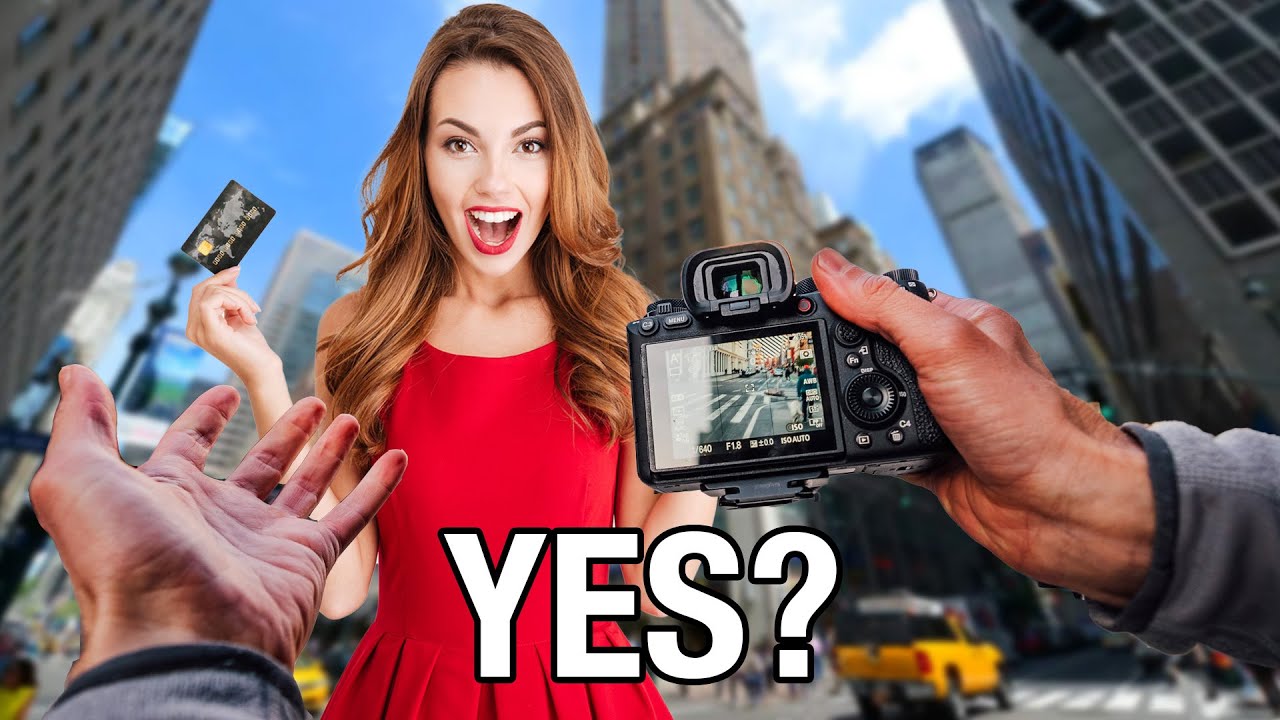
There is a specific kind of paralysis that hits when you’re standing in a crowded public space with a camera and you just… can’t bring yourself to walk up to anyone. I know it well. For years as a wedding photographer, I had a built-in permission structure, a contract, a bride who expected me to be in people’s faces. When I started doing street portraits on my own time, that scaffolding was gone and I froze constantly. It took me an embarrassingly long time to realize the problem wasn’t my gear or my eye. It was the approach, or more accurately, the lack of one.
That’s why this Watch the full tutorial on YouTube by Pierre T. Lambert stopped me mid-scroll. Pierre sets up a simple competition with his friend Eric: ten minutes each, one 50mm lens, as many stranger portraits as possible. What sounds like a YouTube stunt is actually a masterclass in low-stakes, high-volume street approaching. The constraint forces a rhythm, and watching that rhythm emerge in real time teaches you more than most hour-long theory videos about “finding your confidence.”
Whether you shoot portraits for clients, build a personal body of work, or want better raw material to bring into your retouching practice, the ability to get a genuine yes from a stranger changes everything about what you can create. Here’s how Pierre does it, broken down into repeatable steps.
Step 1: Set a Hard Time Limit Before You Start
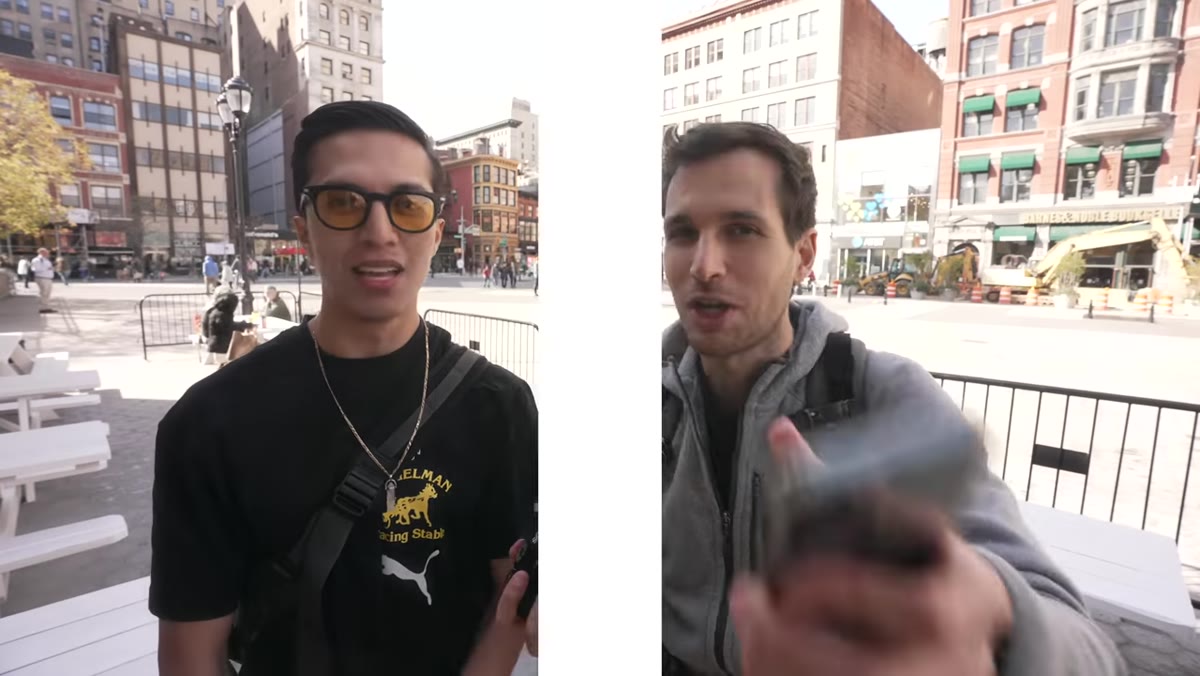 Timer countdown begins, Pierre and Eric outside with camera
Before either photographer takes a single frame, they agree on the rules: ten minutes, then swap. That constraint is doing real work. When you have unlimited time, approaching someone feels high-stakes because every rejection is a dent in your indefinite session. When you have ten minutes, a “no” is just ten seconds gone. Pierre and Eric use a rock-paper-scissors handoff to decide who goes first, which sounds trivial but signals something useful: go before you overthink it. Set a timer on your phone, commit to the window, and start walking.
Timer countdown begins, Pierre and Eric outside with camera
Before either photographer takes a single frame, they agree on the rules: ten minutes, then swap. That constraint is doing real work. When you have unlimited time, approaching someone feels high-stakes because every rejection is a dent in your indefinite session. When you have ten minutes, a “no” is just ten seconds gone. Pierre and Eric use a rock-paper-scissors handoff to decide who goes first, which sounds trivial but signals something useful: go before you overthink it. Set a timer on your phone, commit to the window, and start walking.
Step 2: Open With One Sentence and a Reason
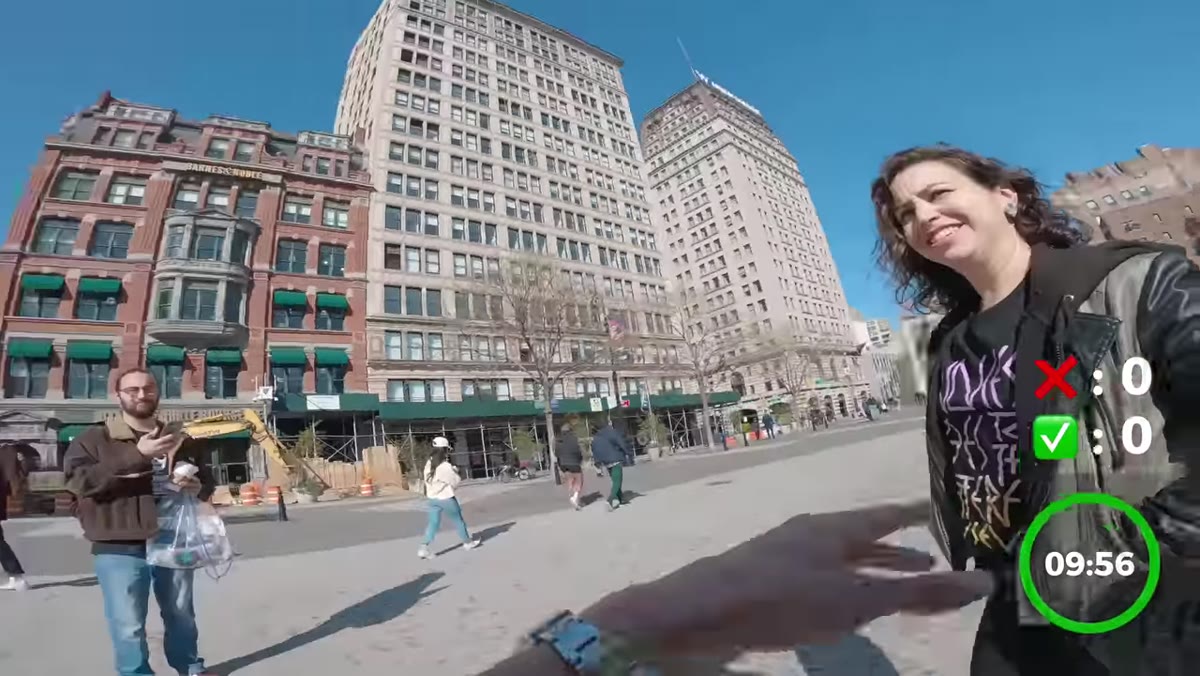 Pierre approaching a subject mid-street, camera in hand
The ask Pierre uses almost every time is short and honest. He names what he’s doing (“I’m trying to take as many portraits as possible”), sometimes adds a genuine compliment (“you look amazing,” “I love your hat”), and makes the time commitment explicit (“it’ll only take a second”). That three-part structure, what you’re doing plus why you noticed them plus how little it costs them, lowers resistance without feeling manipulative. It’s not a script. It’s a framework you can adapt on the fly depending on who’s in front of you.
Pierre approaching a subject mid-street, camera in hand
The ask Pierre uses almost every time is short and honest. He names what he’s doing (“I’m trying to take as many portraits as possible”), sometimes adds a genuine compliment (“you look amazing,” “I love your hat”), and makes the time commitment explicit (“it’ll only take a second”). That three-part structure, what you’re doing plus why you noticed them plus how little it costs them, lowers resistance without feeling manipulative. It’s not a script. It’s a framework you can adapt on the fly depending on who’s in front of you.
Notice he does not apologize for asking. There’s no “I’m so sorry to bother you.” That kind of pre-emptive hedging signals that the request is an imposition. Leading with a direct, warm ask communicates that it isn’t.
Step 3: Accept the No Quickly and Move On
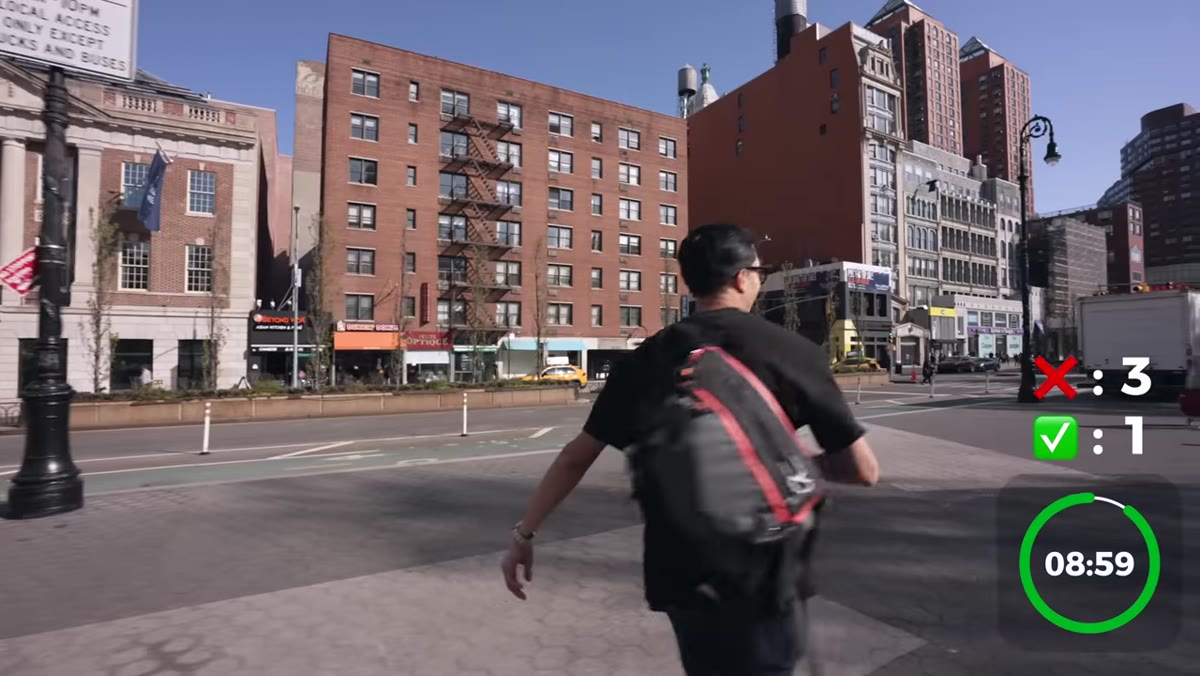 Pierre walks away after a rejection, immediately scanning for the next subject
Several people say no in this video, and the instructive part isn’t the rejection itself, it’s how fast Pierre moves. There’s a “no worries, have a good day” and then he’s already scanning the next ten feet of sidewalk. No lingering, no visible deflation, no slowing of pace. This is a physical skill as much as a mental one. Practice making your pivot quick and your expression neutral, because the person you’re about to ask next might have just watched how you handled the last decline.
Pierre walks away after a rejection, immediately scanning for the next subject
Several people say no in this video, and the instructive part isn’t the rejection itself, it’s how fast Pierre moves. There’s a “no worries, have a good day” and then he’s already scanning the next ten feet of sidewalk. No lingering, no visible deflation, no slowing of pace. This is a physical skill as much as a mental one. Practice making your pivot quick and your expression neutral, because the person you’re about to ask next might have just watched how you handled the last decline.
Rejection rate in Pierre’s ten-minute window is actually pretty low, but it doesn’t feel low in the moment. The speed of moving on keeps your energy and body language from advertising each “no” to the crowd around you.
Step 4: Use the Environment, Don’t Just Extract a Face
 Pierre positions subjects with city background, adjusts their orientation
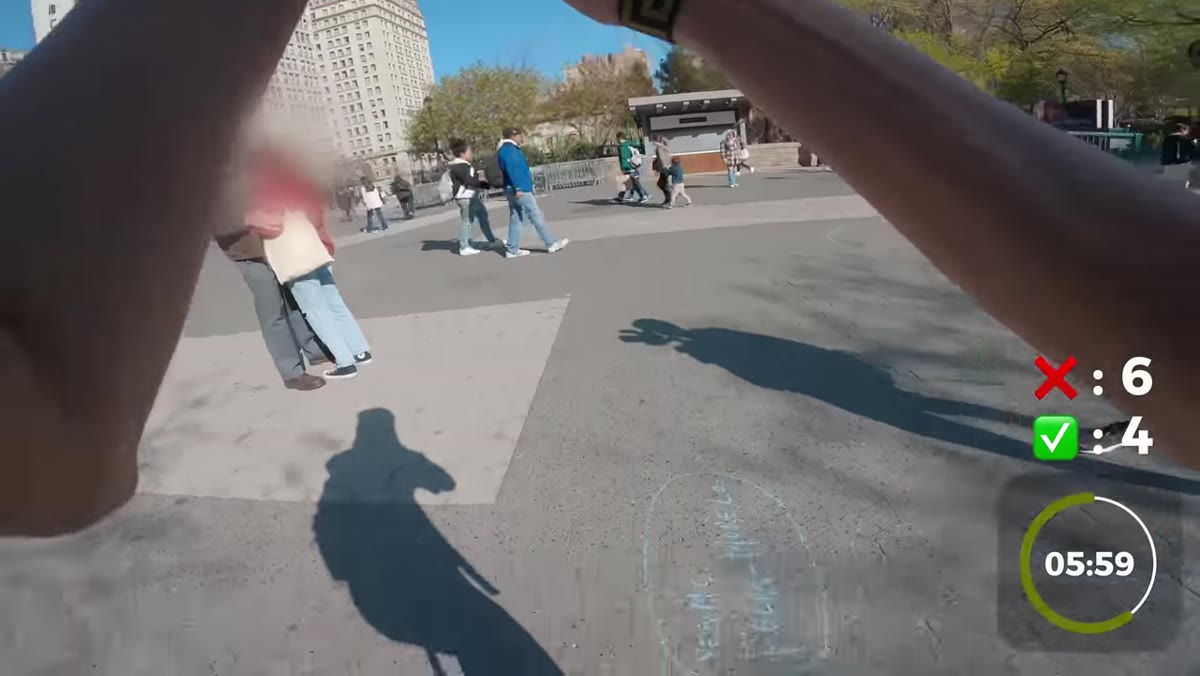
Once someone says yes, Pierre works fast but he isn’t just pointing and firing. You can hear him directing: “can you face that way,” “she can look that way if she wants.” He’s reading the light and the background in real time and making small positioning adjustments that separate a genuine portrait from a rushed snapshot. Even in a ten-minute sprint, he’s making compositional choices.
Pierre positions subjects with city background, adjusts their orientation
Once someone says yes, Pierre works fast but he isn’t just pointing and firing. You can hear him directing: “can you face that way,” “she can look that way if she wants.” He’s reading the light and the background in real time and making small positioning adjustments that separate a genuine portrait from a rushed snapshot. Even in a ten-minute sprint, he’s making compositional choices.
This matters for your retouching workflow too. A portrait shot with intentional light direction gives you so much more to work with in post. Flat, ambient-only shots from dead-on often need heavy lifting just to create dimension. Getting the subject slightly angled to a natural light source during the thirty-second shoot saves you fifteen minutes at the desk later.
Step 5: Use Dogs (and Other People’s Joy) as Social Proof
 Pierre photographs a subject with their dog, crowd nearby watching and smiling
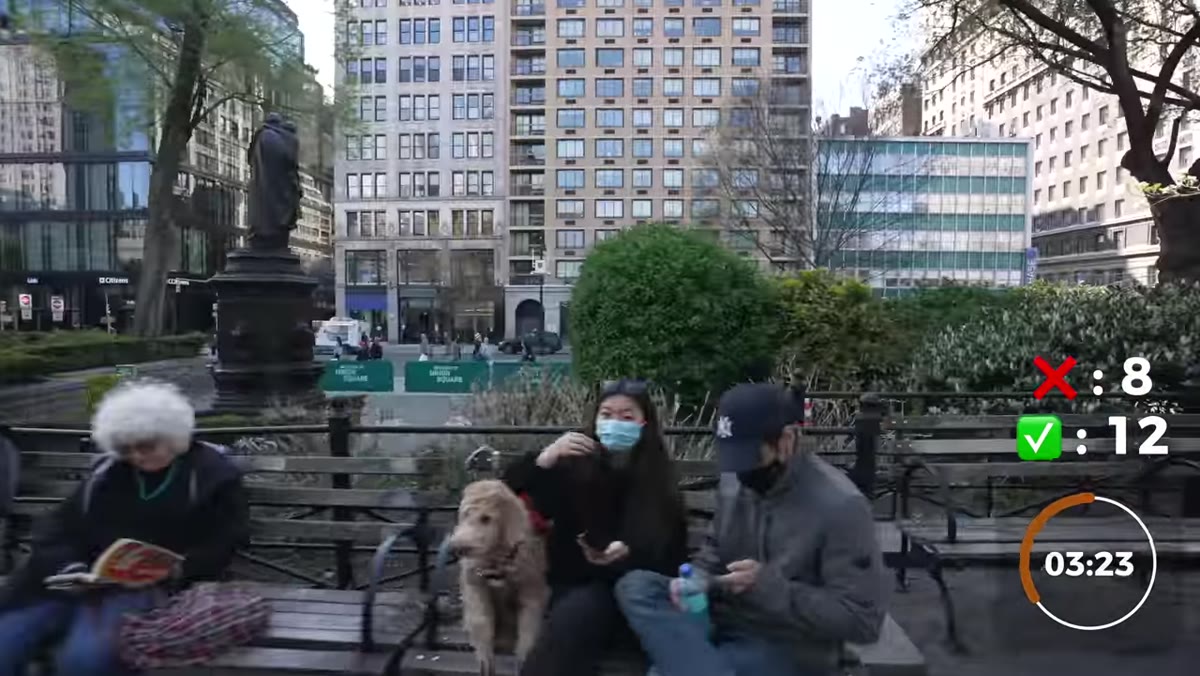
Two or three times in the video, Pierre spots someone with a dog and leans into it hard. He compliments the dog first, the owner second, and the whole exchange softens immediately. This isn’t a trick, it’s a genuine read of social energy. People who are already having a warm public moment, walking a dog, laughing with a friend, watching street performers, are far more likely to say yes than someone walking alone in neutral mode.
Pierre photographs a subject with their dog, crowd nearby watching and smiling
Two or three times in the video, Pierre spots someone with a dog and leans into it hard. He compliments the dog first, the owner second, and the whole exchange softens immediately. This isn’t a trick, it’s a genuine read of social energy. People who are already having a warm public moment, walking a dog, laughing with a friend, watching street performers, are far more likely to say yes than someone walking alone in neutral mode.
Pierre even jokes that the dog is basically an icebreaker for both dating and photography. He’s not wrong. Look for people who are already in a good moment and your yes rate goes up without you changing anything about your pitch.
Step 6: Shoot More in the Final Minute Than You Think You Can
 Pierre in final sixty seconds, rapid-fire approaching multiple groups
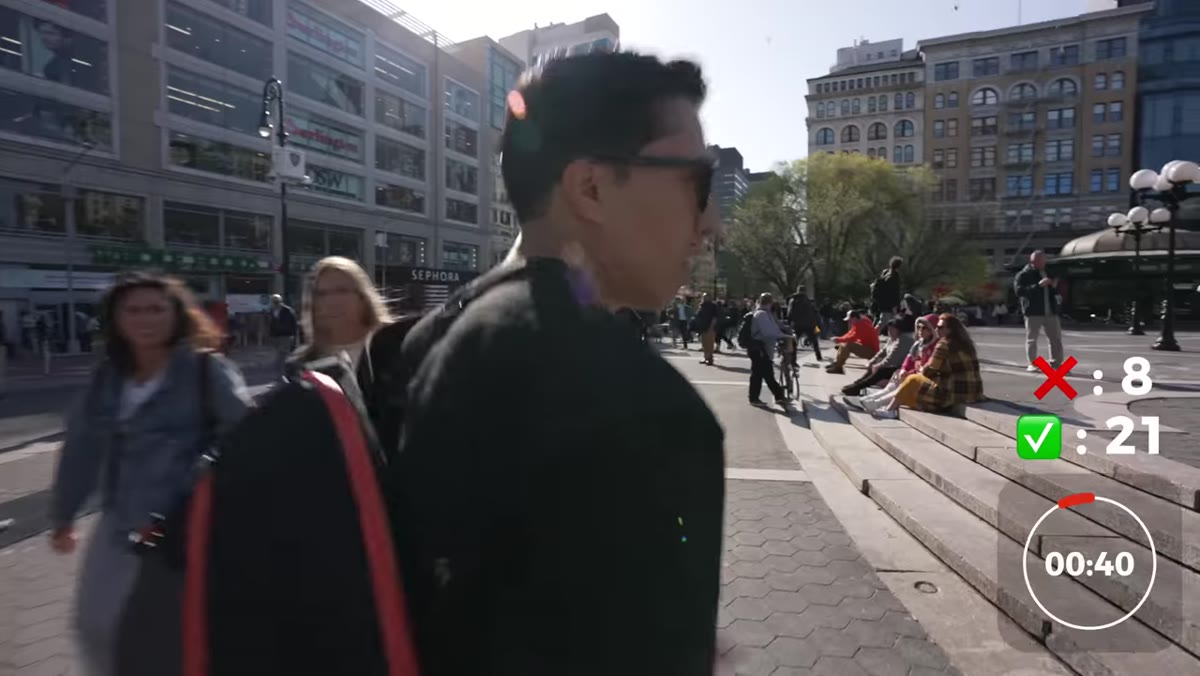
With sixty seconds left, Pierre kicks into a noticeably higher gear. He’s approaching groups, asking couples, covering ground quickly. The lesson isn’t to be sloppy; it’s that you have more capacity than your brain tells you during the comfortable middle of a session. The beginning is nervous, the middle finds a rhythm, and the end should push past comfort. That last sixty seconds produced some of his strongest frames because he stopped deliberating and started trusting his instincts.
Pierre in final sixty seconds, rapid-fire approaching multiple groups
With sixty seconds left, Pierre kicks into a noticeably higher gear. He’s approaching groups, asking couples, covering ground quickly. The lesson isn’t to be sloppy; it’s that you have more capacity than your brain tells you during the comfortable middle of a session. The beginning is nervous, the middle finds a rhythm, and the end should push past comfort. That last sixty seconds produced some of his strongest frames because he stopped deliberating and started trusting his instincts.
If you ever feel yourself losing momentum mid-session, a self-imposed countdown is one of the most effective resets I’ve found. Thirty seconds left, ten frames, go.
What I’d Add from My Own Practice
The video doesn’t address what happens after you get the yes, specifically what to do with the images. In my experience, street portraits are most useful as a portfolio tool when you follow up. If someone gives you their contact info, send them a finished image within 48 hours. A well-retouched portrait delivered promptly to someone who didn’t expect much creates the kind of word-of-mouth that no cold outreach can replicate. It also forces you to actually finish the edit instead of letting the RAW file sit in a folder for six months. That follow-through is where the practice loop closes, and where the strangers you photograph become people who trust you.
The single most transferable thing in this video isn’t a camera setting or a composition trick. It’s the proof that the ask itself gets easier the more you do it, and that a time constraint removes the psychological weight that makes the first ask feel impossible. Watch Pierre move through that plaza and notice how much lighter he looks at minute eight compared to minute two.
Watch the full tutorial on YouTube and pay attention to what his body language looks like after the first few yeses. That’s what momentum actually looks like, and it’s repeatable.
Comments (5)
This should be required reading for anyone starting out.
Never thought of approaching it this way. Really creative.
Couldn't agree more. I've seen this make a huge difference in photography work specifically.
Bookmarked. Coming back to this one for sure.
I keep coming back to this article. It's that useful.
Leave a Comment