Last month I was editing a beauty campaign shot in an urban environment, brick archways and iron railings everywhere, and I kept cropping my way into corners trying to make the images feel intentional rather than accidental. The architecture was beautiful but it was competing with my subject instead of working for her. I knew something was off and I kept adding clarity, adjusting color, reaching for every retouching tool I had, when the actual problem was upstream of all of that. It was a composition problem.
That’s exactly why this Serge Ramelli tutorial landed so hard when I came across it. Sometimes the right insight finds you at the right moment.
Why Paris Is the Perfect Classroom for This Concept
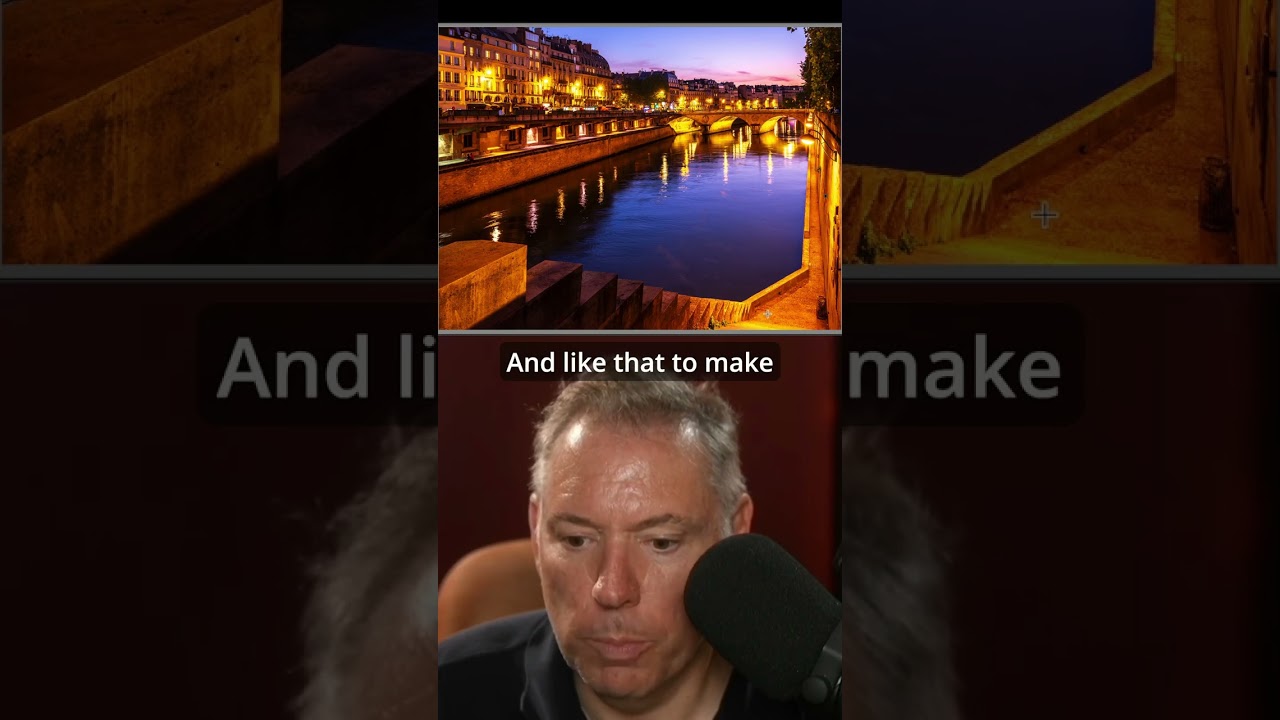
Ramelli shoots in Paris with the kind of relaxed authority that comes from knowing a location deeply, and that familiarity shows in how he talks about finding frames within the scene. The concept itself is not new. Photographers have used doorways, windows, and arches to frame subjects for as long as there have been cameras. But what Ramelli does in this tutorial is articulate why it works, not just that it does, and that distinction matters if you want to apply it consistently rather than stumble into it occasionally.
His core argument is that the human eye needs a place to land and a reason to stay. When you nest your subject inside a second frame that exists naturally in the environment, you give the viewer two layers of visual entry. The outer frame creates context. The inner frame, your subject, receives focus. The eye moves inward and rests there. It is a simple psychological mechanism but it is remarkably reliable.
How He Finds and Locks the Frame
Ramelli’s process in the video is methodical in a way that is easy to replicate. He does not wander and hope. He scouts the architectural element first, positions himself so the frame is cleanly visible, and then places his subject. The order matters. Too often we position the subject and then try to find a frame around them, which usually means settling for a partial or awkward surround that reads as clutter rather than intention.
His specific approach in Paris involves using narrow doorways and corridor-style passages. He positions himself far enough back that the framing architecture occupies the edges of the image without being cropped mid-element. A chopped-off arch reads as a mistake. A complete arch reads as design. He is deliberate about showing the full geometry of whatever frame he is using, which requires backing up more than feels instinctive when you want to be close to your subject.
For exposure, he is exposing for the subject, not the background, which means the outer environment sometimes runs a stop or two brighter or darker than feels “correct.” He leans into this. The slight exposure differential between the frame and the subject actually reinforces the layering effect. Your eye follows the light.
The Editing Choices That Reinforce the Composition
Once he is in post, Ramelli’s editing is in service of the compositional idea rather than working against it. He uses selective darkening around the edges, a subtle vignette, not the heavy-handed circular kind that looks like a filter from 2009, to draw the outer frame slightly deeper. This keeps the viewer’s eye from slipping out of the scene at the corners.
He also works on the subject’s exposure independently, lifting the midtones on the face and any skin visible in the shot. In Lightroom, he does this with the radial filter or masking tools, painting in a gentle brightness increase on the subject while leaving the environmental frame at its natural exposure. The result is a luminosity gradient that flows from the outside in. Frame, slightly darker. Subject, slightly lighter. The composition and the editing are saying the same thing.
For color, he keeps the two zones harmonious rather than contrasting. This is a restraint choice and it is the right one. If you start color-grading the background separately from the subject, you risk making the frame look like a cutout, which kills the sense of depth you worked so hard to build.
Where I’d Push This Further, and Where It Falls Apart
I have been experimenting with this approach since watching the tutorial and I will say: it works beautifully on location, and it gets tricky fast in a studio context where you are building implied frames with lighting rather than using real architecture. When the frame is physical, the depth cues are already baked in. When you are simulating it, you have to do a lot more heavy lifting in retouching to sell the same effect.
For beauty work specifically, I have had the most success using this framing approach as a brief for location scouting rather than something I try to recreate artificially. If I know I want this layered depth, I look for it before the shoot. Trying to manufacture it in post, adding fake architectural elements, warping backgrounds, tends to produce exactly the kind of plastic, constructed feeling I spent a long time learning to avoid.
The technique also demands that your subject is comfortable being positioned precisely and holding that position. It is less forgiving than open environmental portraiture because any significant movement from the subject can break the relationship between them and the frame. Worth noting if you shoot with clients who move a lot or in fast-paced editorial contexts.
One Sentence You Should Take With You
Composition is not decoration layered on top of a good photo. It is the structural decision that determines whether any amount of retouching will matter.
If you want to see exactly how Ramelli scouts, positions, and shoots these frames in real time, watch the full tutorial above. The visual demonstration is what makes the pacing and the deliberateness of his process click in a way that written explanation can only point toward.
Comments
Leave a Comment