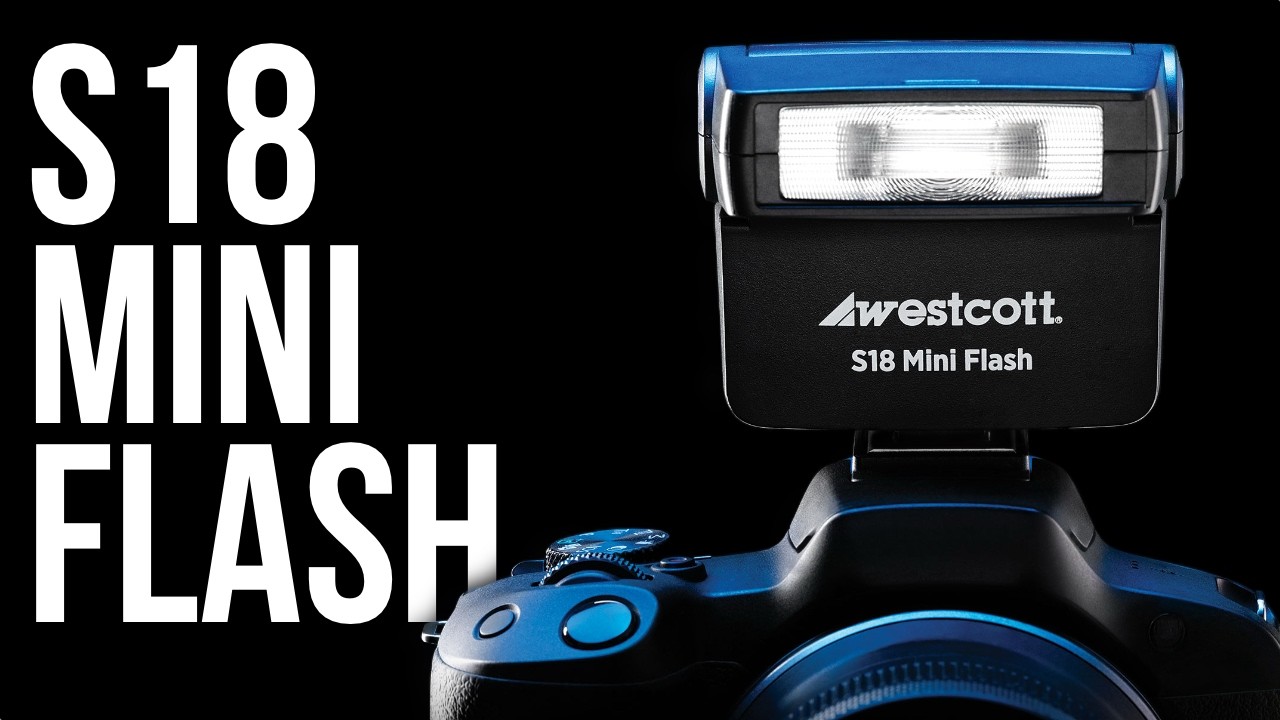
The Westcott S18 Mini Flash: A Game-Changer for Portable Portrait Retouching
When I first started exploring portable lighting solutions for portrait work, I kept running into the same frustration: every flash felt like a compromise. Either it was powerful enough but bulky, or it was compact but underpowered. Then I discovered the Westcott S18 Mini Flash, and honestly, it changed how I approach location shooting.
In this excellent tutorial, Joel Grimes introduces us to a flash that finally bridges that gap. Let me break down what makes this equipment so valuable for anyone serious about beauty and portrait retouching.
Watch the full tutorial on YouTube
Understanding the Power-to-Size Ratio
The first thing that caught my attention about the S18 is its specs. At just 3.5 ounces, this flash delivers 18Ws of power with a Guide Number of 16 at ISO 100. Now, I know those numbers might not mean much if you’re new to flash photography, so let me translate: this gives you significantly more reach and power than your camera’s built-in flash, but it won’t weigh down your camera bag like traditional studio strobes.
What this means for portrait retouching work is that we can control our light much more intentionally. We’re not relying on harsh, unflattering on-camera flash. Instead, we have the flexibility to position and modify our light sources, which is crucial when we’re trying to create the soft, sculpted lighting that makes skin look its best in our retouching.
The Magic of Bounce Lighting for Beauty Work
Here’s where the S18 becomes particularly valuable for portrait and beauty editing: the adjustable head tilts from -3° to 72°, which means we can easily bounce light off ceilings, walls, and reflectors.
In my retouching practice, I’ve learned that bounce lighting is one of the secrets to that coveted soft, natural look. When light bounces off a surface before hitting your subject, it becomes diffused and wraparound. The shadows on the face become gentler, the skin appears smoother, and we create dimension without harsh contrast. This is exactly what we want before we even open our editing software.
Here’s how I typically use this feature:
- Scout your location for reflective surfaces—white ceilings are ideal
- Position the flash at a 45-degree angle to bounce light naturally onto your subject
- Observe the shadows on the face—you’re looking for soft transitions, not harsh lines
- Adjust the tilt angle slightly until you get that flattering, even coverage
- Take test shots to confirm the light is working before your actual shoot
This approach means less retouching work later because we’re capturing beautiful light from the start.
Universal Compatibility Makes Workflow Seamless
One frustration I’ve experienced with lighting equipment is the compatibility nightmare. Different camera brands use different hot shoe connections, and there’s nothing worse than investing in a flash that won’t work with your gear.
The S18 works with Canon, Nikon, Sony, Fujifilm, Panasonic Lumix, Olympus, and Leica through a universal single-pin hot shoe design. For those of us who shoot with multiple camera systems or work with clients using different brands, this is genuinely liberating. We can purchase one flash and use it across our entire equipment ecosystem.
Battery Life and Charging: A Modern Solution
I have to admit—I’m thrilled that Westcott ditched the AA battery approach. The S18 features an internal lithium battery that delivers 500 full-power flashes per charge. For a full day of portrait shooting, that’s more than enough.
But here’s what really impressed me: the USB-C charging. You can charge the flash while you’re shooting if needed, and the fast charging means minimal downtime between shoots. As someone who’s been stuck with dead AA batteries in the middle of a session, I genuinely appreciate this upgrade.
Practical Application for Portrait Sessions
Let me walk you through how I integrate the S18 into a typical beauty or portrait retouching session:
Pre-shoot preparation:
- Fully charge the flash before heading to location
- Pack the USB-C cable as backup
- Scout your location for bounce surfaces
During the shoot:
- Use the tilting head to bounce light naturally
- Take multiple angles and exposures
- Review your shadows—soft transitions mean less retouching later
Post-production:
- With better-lit, more evenly exposed images, our retouching work becomes easier
- Skin tones appear more natural
- We can focus on subtle refinements rather than fighting bad lighting
Final Thoughts
What Joel Grimes demonstrates in his tutorial is that professional results don’t require professional-sized equipment. The S18 Mini Flash proves that thoughtful design can deliver power and portability together. For portrait and beauty retouching professionals, this means better light on location and less correction work in post-production.
If you’re serious about improving your portrait work—whether you’re just starting out or you’re an experienced shooter looking for a reliable backup—I genuinely recommend watching Joel’s full demonstration above. He walks through the features with the practical eye of someone who shoots professionally every day.
Ready to elevate your portrait lighting? Check out the Westcott S18 Mini Flash and see how portable professional lighting can transform your workflow.
Comments (4)
Quality content like this is rare. Keep it up.
Clear and practical. No fluff. Appreciate that.
Great article! I actually covered something related on my site — the photoshop angle is really complementary to this.
This saved me so much time on my last edit. Wish I'd found this sooner.
Leave a Comment