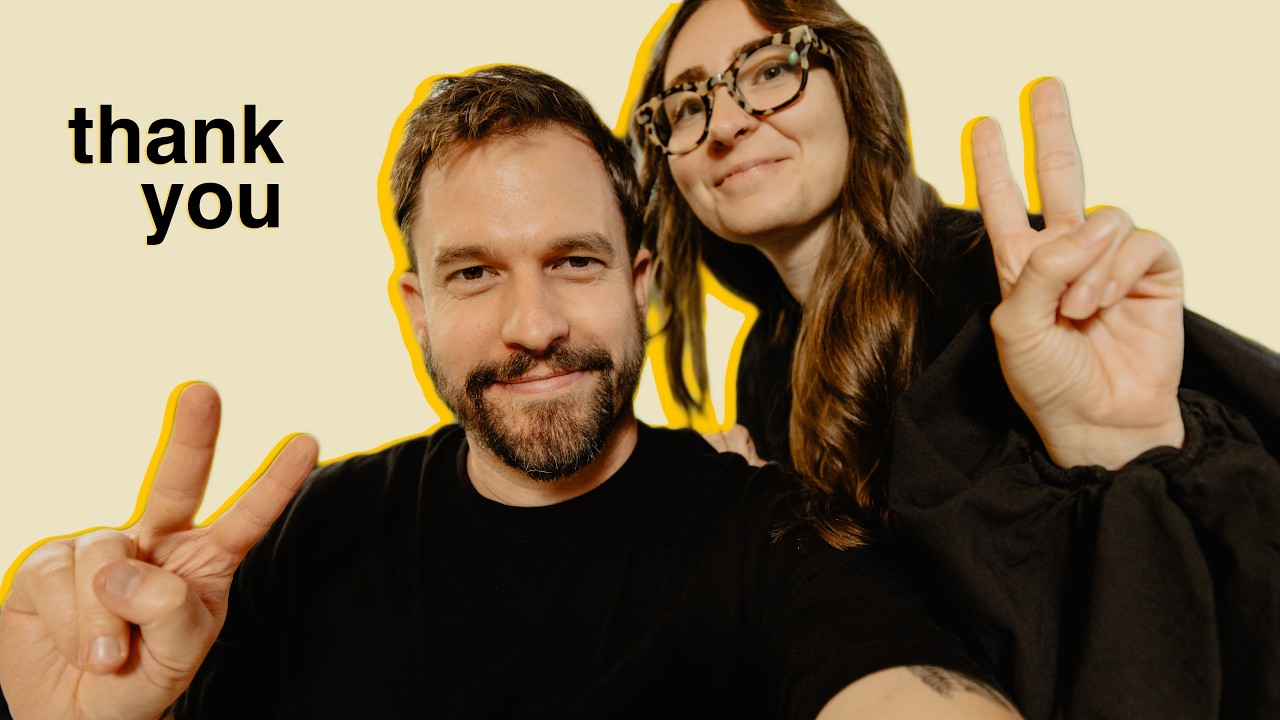
There’s a particular kind of grief that comes when a creative resource you’ve quietly relied on for years announces it’s done. I felt it earlier this year watching the final upload from Mango Street, the YouTube channel run by Rachel and Daniel, who spent a decade making photography and filmmaking tutorials that were somehow both genuinely useful and genuinely warm. Watch the full tutorial on YouTube – or in this case, their farewell video – and you’ll understand immediately why so many photographers feel like they’re losing colleagues rather than content creators.
I came to Mango Street the way a lot of us did: desperate and a little lost. After years of shooting weddings, I burned out hard and pivoted toward beauty retouching. The learning curve was brutal. I remember a client once telling me my edits looked “plastic,” and I had to sit with that for a long time before I understood what she meant. Channels like Mango Street were part of how I rebuilt my eye. Their tutorials didn’t just show settings – they explained why, which is the thing most tutorial channels skip entirely.
Their final video isn’t a technique walkthrough. It’s a retrospective, a thank-you, and honestly a quiet masterclass in what a sustainable creative practice looks like. Here’s what I took from it, broken down the way I’d break down any tutorial worth saving.
Step 1: Acknowledge the full body of work before you move on
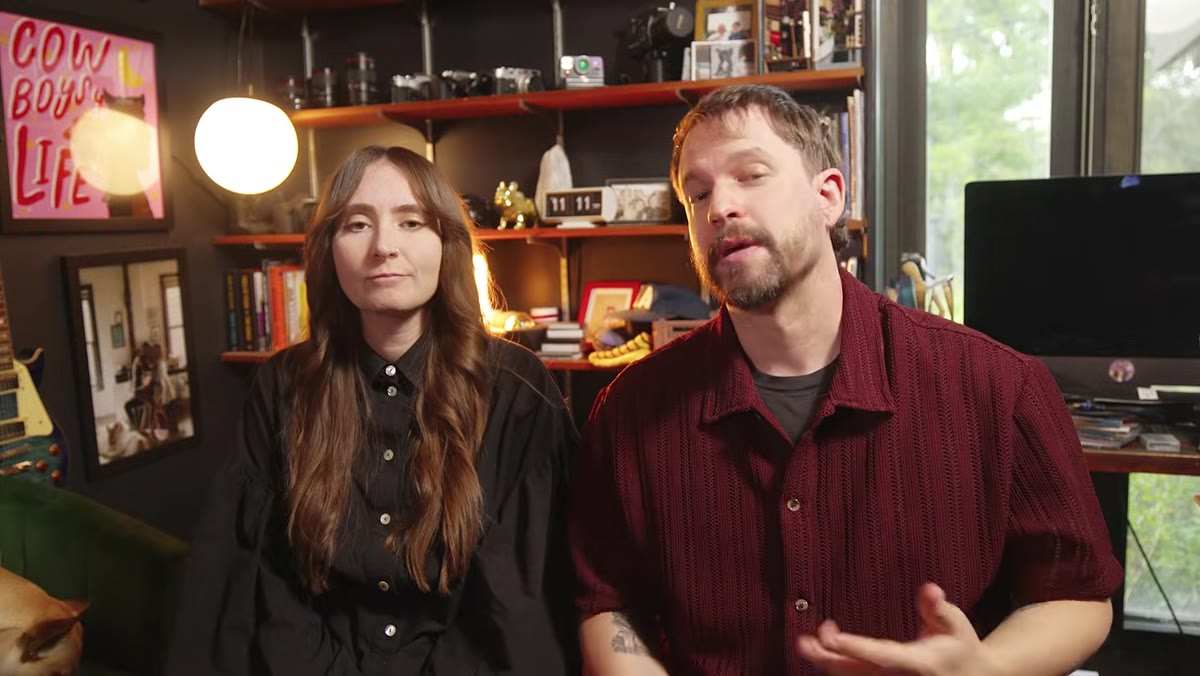 Rachel and Daniel speaking directly to camera in final goodbye
Before anything else, Rachel and Daniel do something I find genuinely instructive: they stop and count. 223 tutorials. 70 photo shoots. 14 video essays. 11 short films. 10 travel videos. One attempted web series. That’s not bragging – that’s inventory. In retouching and in photography, we almost never pause to take stock of what we’ve actually built. We finish a project, deliver the files, and move straight to the next job. But knowing the shape of your own catalog – what you’ve made, what worked, what you’d do differently – is how you develop a real point of view instead of just a collection of techniques.
Rachel and Daniel speaking directly to camera in final goodbye
Before anything else, Rachel and Daniel do something I find genuinely instructive: they stop and count. 223 tutorials. 70 photo shoots. 14 video essays. 11 short films. 10 travel videos. One attempted web series. That’s not bragging – that’s inventory. In retouching and in photography, we almost never pause to take stock of what we’ve actually built. We finish a project, deliver the files, and move straight to the next job. But knowing the shape of your own catalog – what you’ve made, what worked, what you’d do differently – is how you develop a real point of view instead of just a collection of techniques.
Step 2: Name the people who made the work possible
 Credits sequence naming collaborators and crew members
The video spends real time crediting camera operators Nick Spruck and Will Tee Yang, their assistant Melanie Torres, longtime models, collaborating YouTubers, and even a subscriber who became a friend. This isn’t sentimentality. This is professional practice. In beauty retouching, I work with photographers, art directors, hair and makeup artists, and clients who all shape what the final image becomes. When I teach workshops, one of the first things I tell students is to build a network you’d be proud to credit publicly. Your work lives inside those relationships whether you acknowledge it or not.
Credits sequence naming collaborators and crew members
The video spends real time crediting camera operators Nick Spruck and Will Tee Yang, their assistant Melanie Torres, longtime models, collaborating YouTubers, and even a subscriber who became a friend. This isn’t sentimentality. This is professional practice. In beauty retouching, I work with photographers, art directors, hair and makeup artists, and clients who all shape what the final image becomes. When I teach workshops, one of the first things I tell students is to build a network you’d be proud to credit publicly. Your work lives inside those relationships whether you acknowledge it or not.
Step 3: Let the archive speak for itself
 Montage of past intro videos and behind-the-scenes footage
The bulk of the video is a highlight reel: funny intro bits, behind-the-scenes moments from short film productions, travel footage, and clips that show the range of what they attempted over the years. What strikes me watching it is how unpolished some of the early stuff is – and how that rawness is part of the story. I still have my first serious retouching attempt saved in a folder I never open. It’s genuinely bad. The skin tones are wrong, the dodging and burning looks painted on, and I cloned out a mole I had no business touching. I keep it because progress needs a starting point you can point to.
Montage of past intro videos and behind-the-scenes footage
The bulk of the video is a highlight reel: funny intro bits, behind-the-scenes moments from short film productions, travel footage, and clips that show the range of what they attempted over the years. What strikes me watching it is how unpolished some of the early stuff is – and how that rawness is part of the story. I still have my first serious retouching attempt saved in a folder I never open. It’s genuinely bad. The skin tones are wrong, the dodging and burning looks painted on, and I cloned out a mole I had no business touching. I keep it because progress needs a starting point you can point to.
Step 4: Honor the creative experiments that didn’t fully work
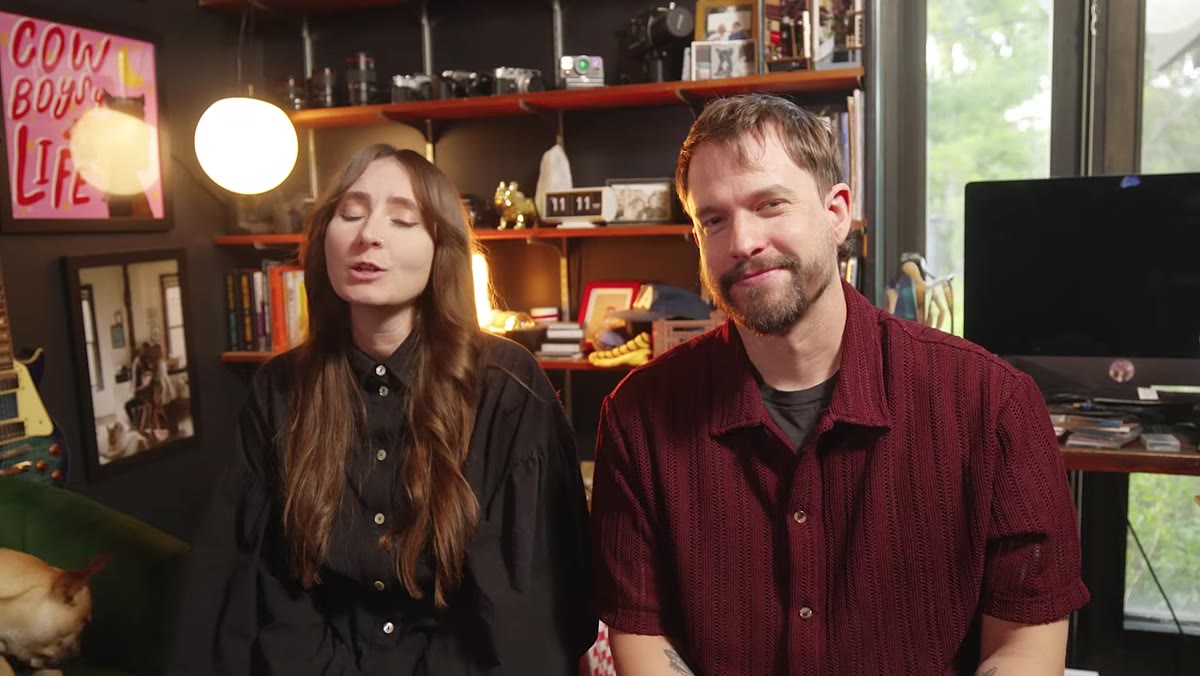 Daniel mentions the one attempted web series with a laugh
Daniel mentions the attempted web series with the kind of lightness that only comes from real distance. It didn’t work, but it made the list anyway. In creative work, especially client-facing work like beauty retouching, we tend to quietly bury the experiments that flopped. But those attempts usually taught us more than the polished deliverables did. I spent almost a full year obsessing over frequency separation after watching a masterclass that rewired how I think about texture versus tone. Half my experiments during that year were failures. They were also the most educational months of my retouching life.
Daniel mentions the one attempted web series with a laugh
Daniel mentions the attempted web series with the kind of lightness that only comes from real distance. It didn’t work, but it made the list anyway. In creative work, especially client-facing work like beauty retouching, we tend to quietly bury the experiments that flopped. But those attempts usually taught us more than the polished deliverables did. I spent almost a full year obsessing over frequency separation after watching a masterclass that rewired how I think about texture versus tone. Half my experiments during that year were failures. They were also the most educational months of my retouching life.
Step 5: Build something that outlasts the active work
 Squarespace sponsorship mention during the farewell
Even in a goodbye video, the Squarespace sponsorship is there – and it’s not cynical. It’s practical. Rachel and Daniel built a presence on multiple platforms, sold presets, offered LUTs, and maintained a site that will continue to exist after the channel stops uploading. For anyone running a photography or retouching practice, this is the move: the tutorial content, the preset packs, the portfolio, the educational resources – these things keep working for you after you’ve moved on to something else. My retouching workshop curriculum came directly out of lessons I learned from trying to explain my process to other people online. Teaching sharpened my thinking in ways that client work alone never did.
Squarespace sponsorship mention during the farewell
Even in a goodbye video, the Squarespace sponsorship is there – and it’s not cynical. It’s practical. Rachel and Daniel built a presence on multiple platforms, sold presets, offered LUTs, and maintained a site that will continue to exist after the channel stops uploading. For anyone running a photography or retouching practice, this is the move: the tutorial content, the preset packs, the portfolio, the educational resources – these things keep working for you after you’ve moved on to something else. My retouching workshop curriculum came directly out of lessons I learned from trying to explain my process to other people online. Teaching sharpened my thinking in ways that client work alone never did.
Step 6: Say goodbye cleanly and completely
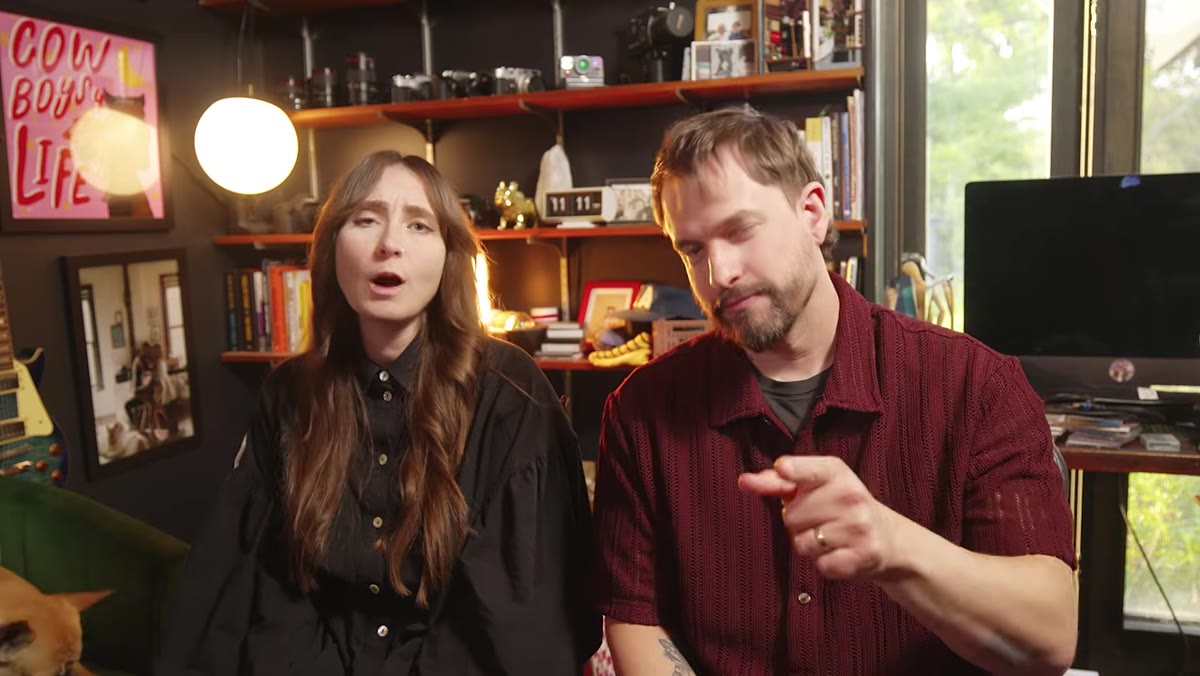 Rachel and Daniel’s final on-camera thank-you to their audience
The video ends without hedging. There’s no “we might be back” or “we’ll see what happens.” They thank their audience – including people who left hate comments that boosted their engagement, which is a line I respect enormously – and they close the door. In creative work, clean endings are harder than they look. Projects drag, clients ghost, series lose steam and just stop rather than finish. Rachel and Daniel ending with intention, with gratitude, and with specificity is worth noticing. It’s the same discipline that makes a well-finished retouch different from one that just stopped.
Rachel and Daniel’s final on-camera thank-you to their audience
The video ends without hedging. There’s no “we might be back” or “we’ll see what happens.” They thank their audience – including people who left hate comments that boosted their engagement, which is a line I respect enormously – and they close the door. In creative work, clean endings are harder than they look. Projects drag, clients ghost, series lose steam and just stop rather than finish. Rachel and Daniel ending with intention, with gratitude, and with specificity is worth noticing. It’s the same discipline that makes a well-finished retouch different from one that just stopped.
What I’d add from my own practice
The thing Mango Street modeled consistently, and what I try to bring into my retouching workshops, is the habit of explaining your reasoning out loud. Not just “I use frequency separation here” but “I use frequency separation here because I want to correct uneven skin tone without disturbing the natural pore texture underneath.” That gap – between showing a technique and explaining the decision behind it – is where most educational content falls apart. When you can articulate why you’re making a choice, you can adapt that choice to new situations. When you’ve only memorized the steps, you’re stuck the moment something unexpected happens in a file.
If you’ve been using Mango Street tutorials as part of how you’ve grown as a photographer or retoucher, their back catalog is still there. 392 videos. Start with whatever technique is frustrating you right now.
Watch the full tutorial on YouTube and thank them properly, even if they’re not making new ones anymore. Some teachers stay with you longer than the classes do.
Comments (13)
Printing this out and pinning it next to my monitor. That good.
Wow, I had no idea you could do this. Mind blown.
Really solid breakdown. This pairs perfectly with the lighting work I've been writing about.
Been doing this wrong for years apparently. Thanks for the wake-up call.
This should be required reading for anyone starting out.
Tried this technique this morning. Game changer for real.
Applied this to my portfolio shots and the improvement is noticeable.
Would love to see a follow-up going deeper into this topic.
Bookmarked. Coming back to this one for sure.
Solid advice. Especially the part about taking your time with it.
Printing this out and pinning it next to my monitor. That good.
Great article! I actually covered something related on my site — the landscape angle is really complementary to this.
Applied this to my portfolio shots and the improvement is noticeable.
Leave a Comment